
Why Is My Child Struggling in School Despite Trying Hard?
It can be hard for parents to watch a child work hard, do homework, go to school regularly and still struggle with reading, writing, mathematics or understanding lessons.
The first question that usually comes up is, "Why isn't my child getting better?"
Remember, a child who struggles in school is not always a child who is lazy, careless or not trying hard enough. Sometimes, the way a child is taught is not the way the child learns best.
At IBP Remedial Services, we believe in understanding the child and not just looking at the marks. The philosophy of the centre is to tailor teaching to the individual learning style and needs of a child. The programs are structured, sequential, multidisciplinary and multisensory, with support for different learning difficulties.
When Hard Work Doesn't Lead to Expected Results
Some children take a lot longer than their classmates to complete homework. They may read a paragraph time and time again, forget multiplication tables, make spelling mistakes repeatedly, or struggle to put their thoughts down on paper.
Some children may understand something during a lesson but forget it when they need to use it on their own.
This can be confusing for parents. The child seems to be trying, but the results don't show the effort.
It is worth noticing the difference between effort and academic performance. It might signal that the child needs a different sort of help, not simply more practice.
Your Child Might Learn Differently
Children don't all learn and process information in the same way.
Some children learn better through visual materials, hands-on activities, repetition, movement, discussion, or a combination of different approaches.
IBP Remedial Services uses multisensory and individualized approaches for addressing learning needs. Its academic support includes English Remedials and Math Remedials, while its wider services include psychological assessments, speech and language therapy, occupational therapy, sensory integration therapy and counselling.
The objective is not to have all children learn in exactly the same way. It is about knowing what will assist a particular child to progress.
Is There an Undisclosed Learning Difficulty?
Sometimes ongoing academic difficulties might be associated with areas such as reading, writing, mathematics, memory, attention or information processing.
If parents are unsure why their child is struggling, a professional psychological and educational assessment can provide a clearer starting point. IBP's assessment services cover areas including academic achievement, learning difficulties, intelligence, behavioral assessment and neurodevelopmental screening.
This is not to say that every child who has trouble in school has a learning disability.
A child could be going through a temporary academic gap, struggling with one particular subject, experiencing language difficulties, facing attention-related challenges, or dealing with something else that is affecting their ability to learn. A proper assessment can help parents stop guessing and better understand what is really going on.
See Past the Report Card
School grades are important, but they don't tell the whole story.
Parents can also watch for patterns such as:
- Taking an unusually long time to complete schoolwork
- Difficulty remembering recently learned information
- Avoiding reading and writing tasks
- Frequent spelling or calculation errors
- Difficulty following multiple instructions at once
- Difficulty explaining what was learned from a lesson
- Becoming frustrated easily with homework
- Losing confidence despite putting in effort
- Doing much better in some activities than others
One or two of these signs do not necessarily mean a child has a learning difficulty. The important thing is whether the difficulties are ongoing and are affecting the child's day-to-day learning.
With the Right Assessment, There's Direction
Assessment can provide a more concrete starting point when parents don't know why their child is struggling.
The IBP assessment process is designed to gain an understanding of a child's abilities, difficulties and learning needs. The centre's assessments are carried out by qualified and experienced professionals, with families receiving detailed reports and recommendations.
That can be helpful for parents because it changes the question from:
"Why can't my child do better?"
to:
"What makes learning difficult, and what support will help?"
Now, there's a much better question.
The Support Should Be Appropriate to the Child
When a child's needs are better understood, support can be planned around those needs.
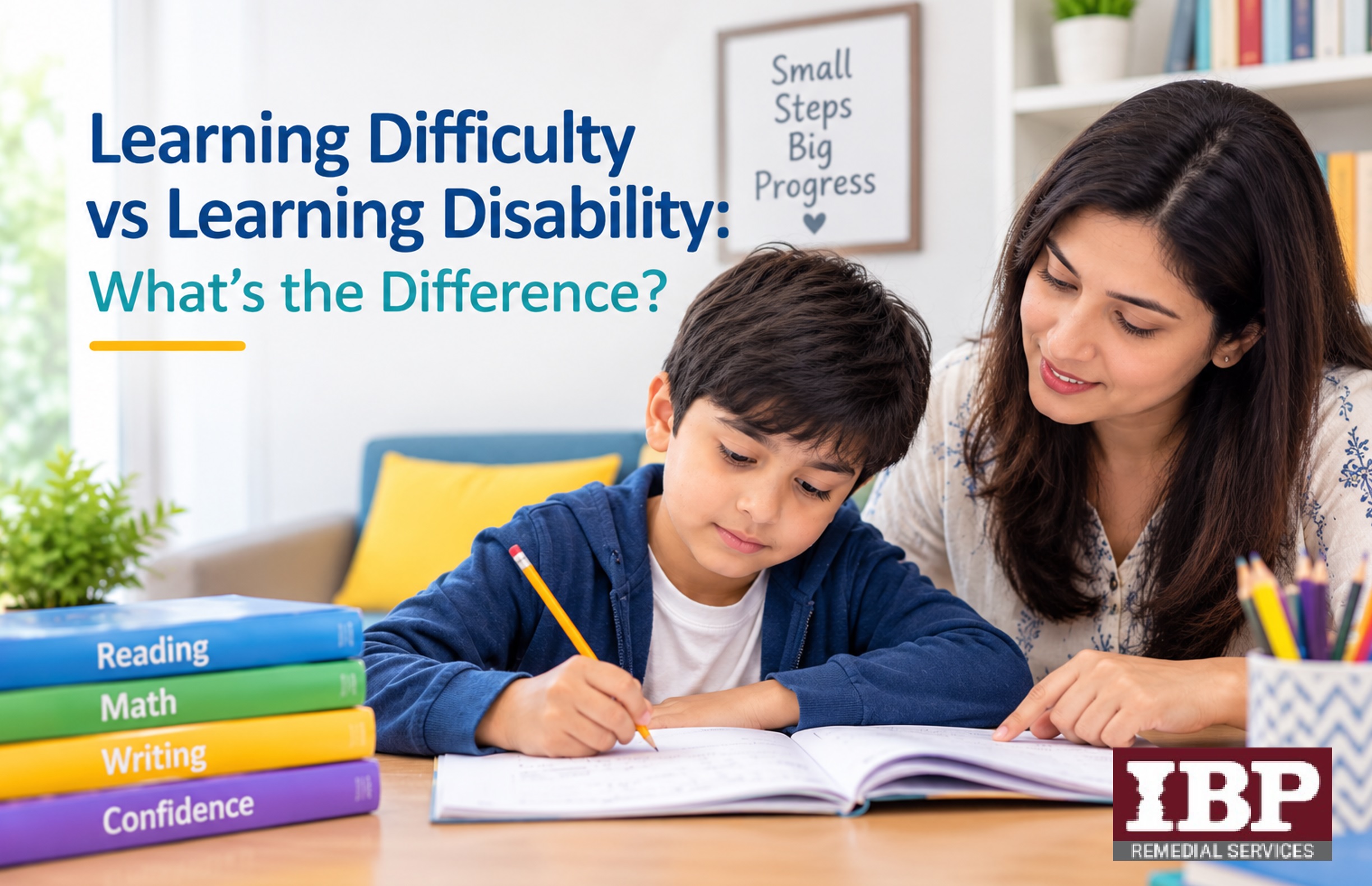
This may mean extra help with reading and understanding for one child. Another may need help with writing, spelling or arithmetic. IBP's English Remedials support areas such as reading, writing, vocabulary, spelling, phonics and grammar, while Math Remedials focus on mathematical understanding, calculations and problem-solving.
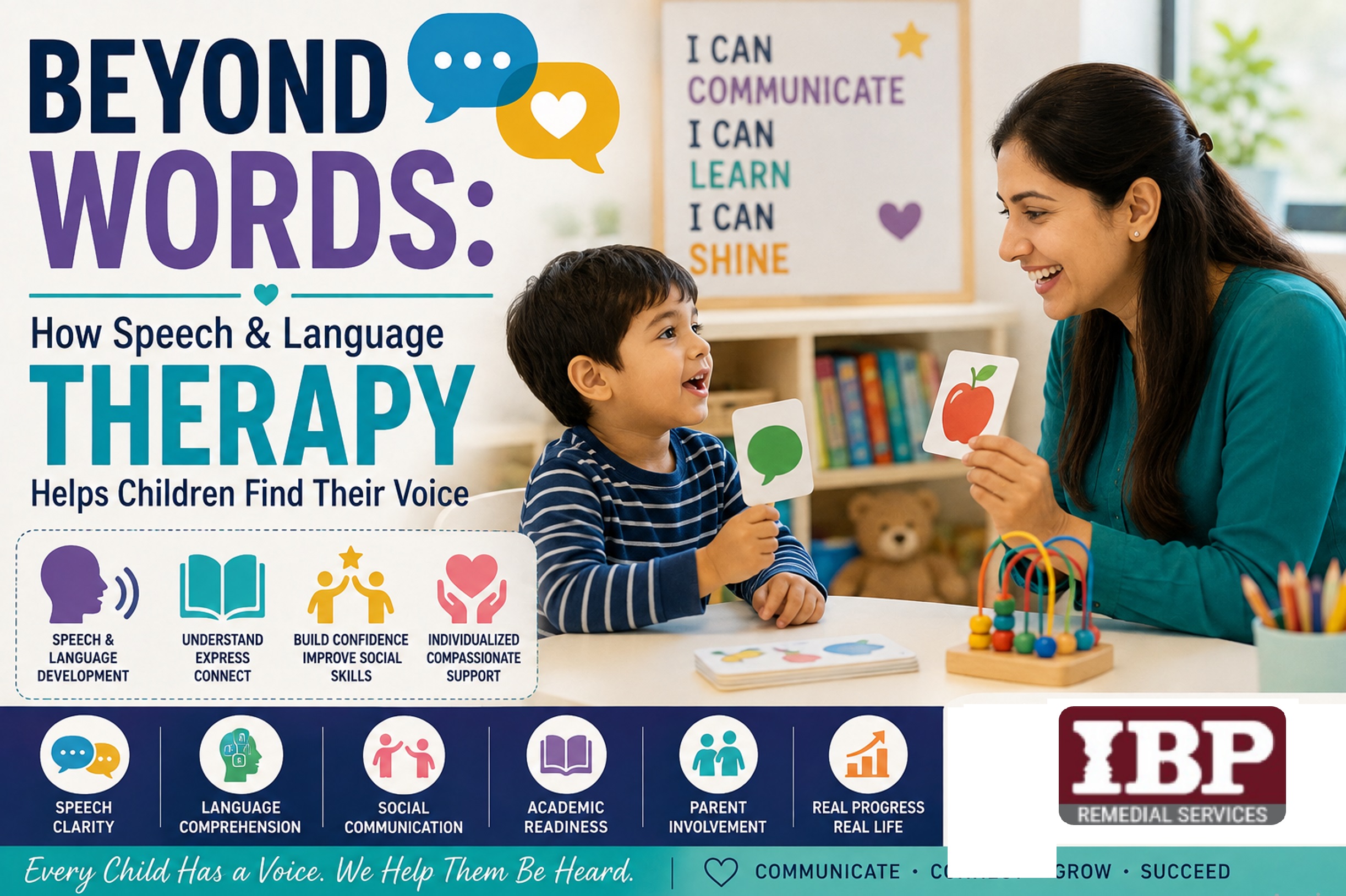
If a child has communication needs, Speech & Language Therapy may help. Children experiencing difficulties with speech, language comprehension or expressive communication may benefit from individualized support.
If motor, coordination or sensory issues are affecting participation in learning, Occupational Therapy or Sensory Integration Therapy could be appropriate areas to explore.
IBP Remedial Services combines academic, psychological and therapeutic services so different areas of a child's development can be taken into account rather than looking at school performance in isolation.
Confidence Matters, Too
More than grades can be affected by repeated academic struggles.
If a child works hard but still gets poor grades, they might think, "I'm not smart enough for school." Over time, frustration can become avoidance, homework anxiety or reluctance to participate in class.
That's why support needs to be more than just fixing mistakes. Children also need opportunities to experience progress.
Small improvements in reading, writing, comprehension, mathematics or communication can slowly restore confidence.
When emotional or behavioral concerns are also affecting school life, IBP's Play & Behavior Therapy provides a child-friendly setting where children can work on emotional expression, coping skills, behavior and confidence.
What Can Parents Do?
If your child is consistently struggling despite putting in real effort, try not to simply respond by telling them to work harder.
Instead, start by looking at where the difficulty occurs. Speak with the child's teacher, talk about what you are seeing, and consider whether a professional assessment might provide helpful answers.
Most importantly, don't compare your child with siblings or classmates.
Every child has strengths. The key is often finding the approach that allows those strengths to support areas that are more difficult.
All Children Have the Right to Be Understood
A child who is trying hard at school but still struggling may not need more pressure. They may need someone to understand how they learn.
IBP Remedial Services in DHA, Karachi provides academic and therapeutic support to children according to their learning needs. The philosophy of the centre is based on interactive and hands-on learning, as well as tailoring teaching to different learning styles and difficulties.
Understanding why a child is struggling helps parents move from frustration to a practical plan.
The goal isn't just to help a child improve their marks. It is to help them understand, participate, progress and feel confident about their ability to learn.