
Signs Your Child May Benefit From Speech Therapy
Every child grows at their own pace. Some children start talking early, while others take a little longer to find their words. But if your child has trouble expressing their needs, following simple instructions, or being understood by others, you may wonder if they need extra support.
Recognising the signs your child may benefit from speech therapy can help you decide when to seek professional advice. Speech therapy can support children who have difficulty with speech sounds, language development, fluency, or everyday communication. With the right guidance, children can build useful skills and become more confident when expressing themselves.
7 Signs Your Child May Benefit From Speech Therapy
1. Your Child Starts Talking Later Than Expected
A delay in speech is one of the first signs parents may notice. Your child might use fewer words than expected for their age or may not yet be putting words together into short phrases.
For example, a toddler may rely mainly on pointing, gestures, or sounds to ask for things. An older child may know what they want but struggle to explain it.
Children develop at different rates, so a delay does not automatically mean something is wrong. However, if you are concerned about your child's speech milestones, a qualified speech-language therapist can assess their communication skills and suggest the next steps.
2. Your Child Is Difficult to Understand
Young children often mispronounce words while learning to speak. This is a normal part of development. However, if your child is still difficult to understand as they grow older, it may be worth seeking professional advice.
You might notice that your child leaves sounds out of words, replaces one sound with another, or struggles to pronounce certain sounds clearly. Family members may understand them because they are familiar with their speech, while teachers and other children may have difficulty understanding them.
Speech therapy can help children practise speech sounds through activities suited to their age and individual needs.
3. Your Child Has Trouble Following Instructions
Speech and language development is not just about talking. Children also need to understand what other people say.
Does your child often seem confused by simple instructions? Do they struggle to answer questions or follow directions that are appropriate for their age?
For example, you might ask your child to pick up a toy and put it on the table, but they have difficulty understanding what to do. If this happens regularly, it may be helpful to look more closely at their language comprehension.
A speech-language therapist can assess how your child understands words, questions, and instructions. They can then suggest activities to support understanding in everyday situations.
4. Your Child Has Trouble Expressing Their Thoughts
Some children understand what other people say but find it difficult to explain their own ideas. They might use very short sentences, struggle to find the right words, or become frustrated when trying to tell a story.
You may notice that your child has difficulty asking for something they need or explaining what happened at school. They may become upset because they know what they want to say but cannot express it clearly.
Speech therapy can help children build vocabulary, form sentences, organise their thoughts, and communicate their needs. These skills can make conversations at home and school easier.
5. Your Child Stutters or Repeats Sounds
Repeating sounds or words can happen during childhood as speech develops. However, frequent repetitions, stretched sounds, or moments when your child seems unable to get a word out may be signs of stuttering.
Some children also show tension when speaking or begin avoiding certain words because talking feels difficult.
If you notice these patterns, give your child time to finish speaking. Avoid rushing them or repeatedly telling them to slow down. A speech-language therapist can help you understand what is happening and whether support may be useful.
6. Your Child Finds Social Communication Difficult
Communication involves more than saying words clearly. Children also learn how to take turns in conversations, listen to others, respond to questions, and understand social cues.
Some children find it difficult to start conversations, stay on topic, or join in with other children. They may struggle to explain what they mean or recognise when someone else wants to speak.
These difficulties can have different causes. A professional assessment can help identify the communication skills your child may need support with.
7. Your Child Becomes Frustrated When Communicating
When children cannot make themselves understood, they may become upset, cry, or withdraw from conversations. They might avoid answering questions or prefer to let someone else speak for them.
This can be especially difficult when a child wants to make friends or join classroom activities but struggles to communicate.
If communication difficulties are affecting your child's confidence or daily routine, consider discussing your concerns with a professional. Speech therapy may help your child develop practical ways to express themselves and take part more comfortably in everyday interactions.
When Should You Consider Speech Therapy?
You do not need to wait until your child struggles at school before asking for help. If you have concerns about their speech, language, or communication, speak with your paediatrician or arrange an assessment with a qualified speech-language therapist.
A therapist can assess your child's current abilities, developmental history, and specific challenges. They may also recommend a hearing check or further assessment if needed.
Remember that every child develops at their own pace. The goal is not to compare your child with everyone else. It is to understand their needs and find the right support.
How IBP Remedial Services Can Help
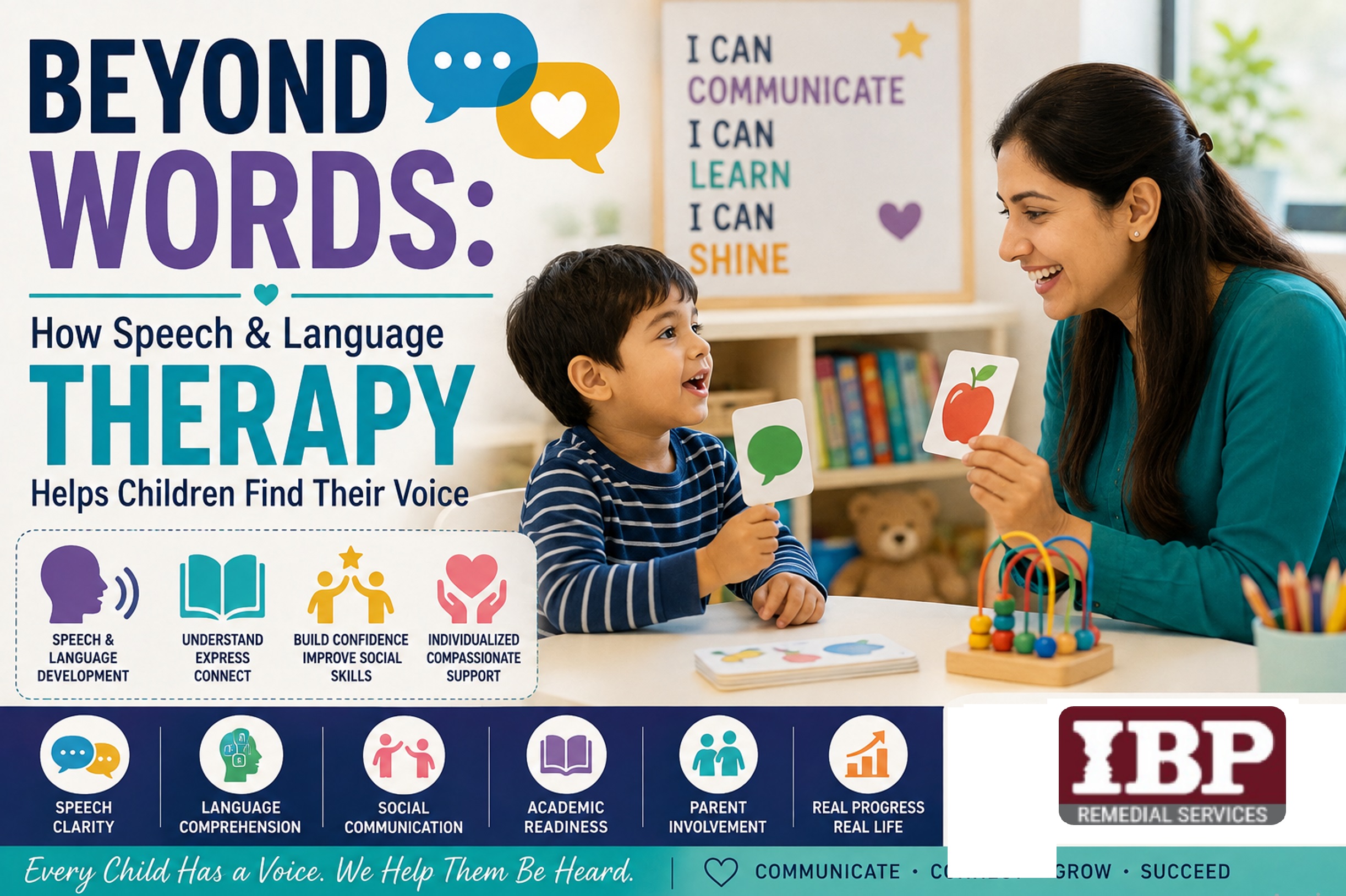
IBP Remedial Services provides speech and language therapy to help children develop their communication skills through individualised support. Depending on the child's needs, activities may include practising speech sounds, building vocabulary, understanding instructions, and developing everyday conversation skills.
Parents can also learn simple ways to support communication at home. Reading together, talking about daily activities, asking simple questions, and giving children enough time to respond can all create opportunities to practise communication.
Explore Speech and Language Therapy at IBP Remedial Services to learn more about the available services and support for children.
Help Your Child Communicate With Confidence
Seeing your child struggle with communication can raise questions, but you do not have to work everything out alone. Paying attention to how your child speaks, understands others, and interacts in daily life can help you recognise when extra support may be useful.
If you notice any of these signs, consider speaking with a qualified professional. With appropriate guidance and regular practice, children can work towards clearer communication, stronger language skills, and greater confidence in everyday life.