
How Speech Difficulties Can Affect a Child's Confidence and Learning
Communication plays an important role in a child's development. Children use speech and language to express their needs, ask questions, participate in classroom activities, make friends, and share their ideas. When a child has ongoing speech difficulties, these everyday experiences can sometimes become challenging. Over time, difficulties with communication may affect not only how clearly a child speaks but also their confidence, classroom participation, and learning.
Speech difficulties can include problems with pronunciation, articulation, fluency, speech delays, or using language effectively. Some children may also have difficulty understanding what others say or organizing their thoughts into words. Early support can help children develop stronger communication skills and participate more confidently at home, at school, and with their peers.
What Are Speech Difficulties?
Speech difficulties can take different forms. Some children may have trouble producing particular sounds clearly, while others may have difficulty putting sounds or words together. Some children may experience stuttering or other fluency difficulties that interrupt the natural flow of speech.
Language difficulties can also affect a child's ability to understand instructions, find the right words, form sentences, or communicate ideas effectively.
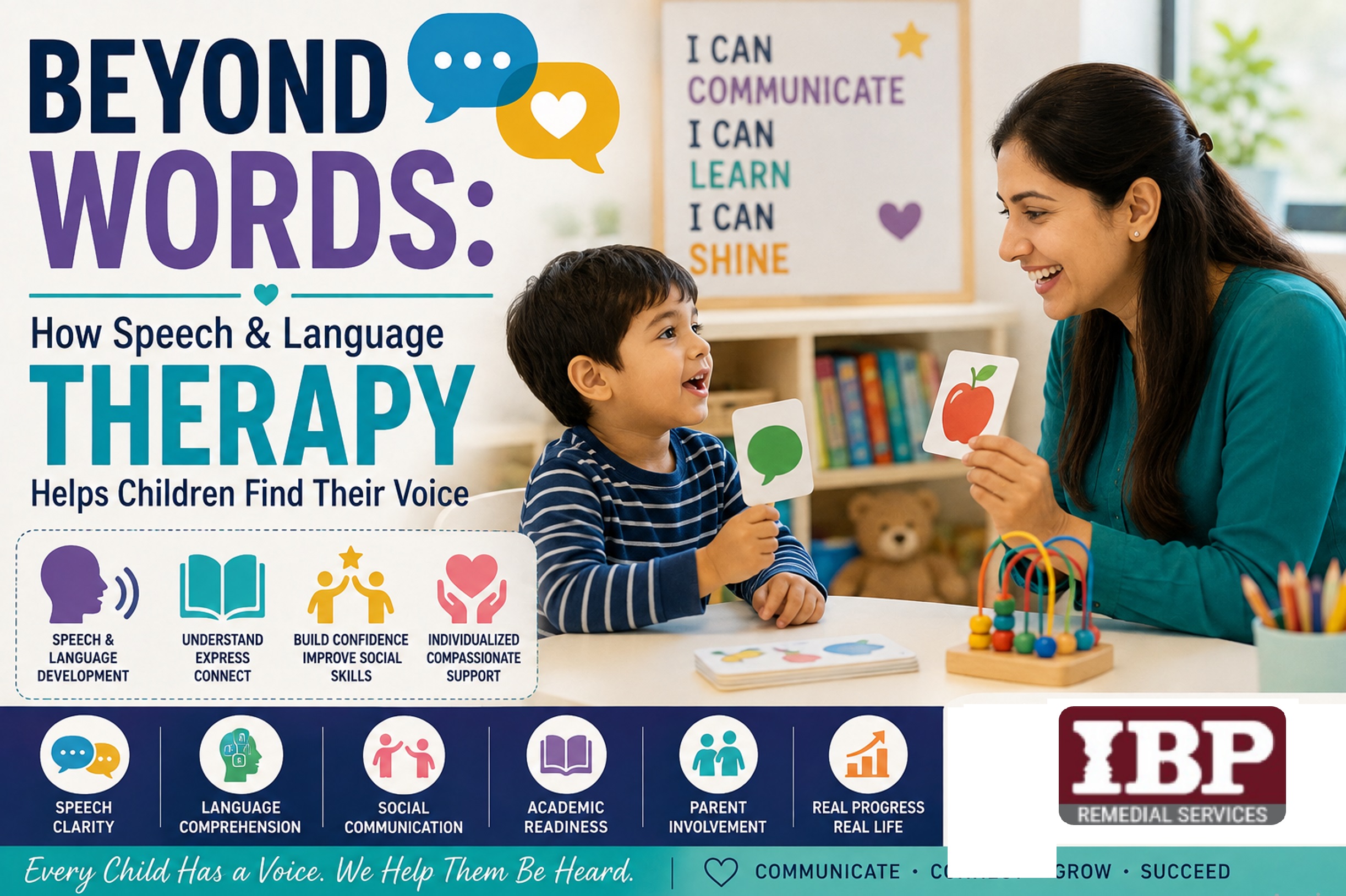
IBP Remedial Services provides Speech & Language Therapy for children experiencing speech delays, articulation difficulties, language challenges, fluency problems, and social communication difficulties. The therapy program uses individualized goals and activities based on each child's communication needs.
How Speech Difficulties Can Affect Confidence
1. Children May Become Reluctant to Speak
When children notice that other people have difficulty understanding them, they may become hesitant to speak.
A child may avoid answering questions in class, talking to unfamiliar people, participating in group activities, or speaking in front of classmates. This does not necessarily mean the child has nothing to say. They may simply be worried about making a mistake or being misunderstood.
Repeatedly avoiding communication can reduce opportunities for children to practise their skills and express themselves.
2. Fear of Mistakes Can Affect Participation
Children naturally make mistakes while developing speech and language skills. However, when a child becomes overly concerned about how others will respond, they may choose not to participate.
For example, a child who struggles to pronounce certain sounds may know the answer to a question but avoid raising their hand. Similarly, a child experiencing stuttering may worry about speaking in front of the class.
A supportive environment can make a significant difference. Children benefit when adults focus on what they are communicating rather than constantly correcting how they speak.
The American Speech-Language-Hearing Association (ASHA) provides information for parents about children's speech and language development and communication concerns.
How Speech Difficulties Can Affect Learning
3. Classroom Participation May Become Difficult
Learning often involves communication. Children are expected to listen to instructions, answer questions, discuss ideas, read aloud, participate in presentations, and work with classmates.
A child with speech or language difficulties may find some of these activities more demanding.
They may understand the material but have difficulty demonstrating what they know verbally. This can sometimes make their academic abilities appear weaker than they actually are.
Creating a supportive classroom environment can help children participate without feeling embarrassed or overly pressured about their speech.
4. Following Instructions Can Be Challenging
Some children with language difficulties may struggle to understand or remember verbal instructions, particularly when instructions involve several steps.
For example, a teacher may ask a child to take out a workbook, complete a particular exercise, and then submit it for review. A child who has difficulty processing spoken language may miss part of the instruction.
This can affect classroom performance even when the child is capable of completing the academic task.
Parents and teachers can help by giving clear instructions, breaking longer tasks into smaller steps, and checking that the child understands what is expected.
5. Reading and Writing May Also Be Affected
Speech and language development is connected to several aspects of literacy development. Difficulties with sounds, vocabulary, sentence structure, or understanding language may create additional challenges when children are learning to read and write.
This does not mean every child with a speech difficulty will experience reading or writing problems. However, when communication concerns and academic difficulties occur together, it may be useful to explore the child's broader learning profile.
IBP Remedial Services also provides English Remedials and other academic support that can complement a child's individual learning needs.
Social Relationships Can Also Be Affected
Communication is an important part of making and maintaining friendships.
A child who struggles to express ideas, enter conversations, understand social cues, or keep up with peer conversations may find social situations frustrating. They may participate less frequently in group play or prefer to remain quiet.
Over time, limited participation can reduce opportunities to practise communication in natural social situations.
Speech and language support can therefore involve more than improving pronunciation. IBP's Speech & Language Therapy program can address areas such as social communication, conversational abilities, expressive language, receptive language, and functional communication.
Signs Parents Should Pay Attention To
Parents may want to seek professional guidance when they notice persistent communication difficulties that interfere with everyday life.
Some signs may include:
- Difficulty being understood by family members or other people
- Frequent frustration when trying to communicate
- Avoiding conversations or speaking situations
- Difficulty following verbal instructions
- Problems finding or using appropriate words
- Persistent pronunciation or articulation difficulties
- Frequent repetitions or blocks while speaking
- Difficulty participating in conversations with peers
- Concerns about communication affecting school performance
Communication develops differently for every child, so concerns are best considered in the context of the child's age, development, and individual circumstances. If you have concerns about your child's communication development, discussing them with a qualified speech-language professional can help determine whether further assessment or support may be appropriate.
How Speech Therapy Can Help
Speech and language therapy can provide children with structured opportunities to develop communication skills in a supportive environment.
Depending on the child's needs, therapy may focus on articulation, language development, fluency, comprehension, social communication, vocabulary, sentence formation, or functional communication.
At IBP Remedial Services, speech and language therapy can include individualized treatment goals, interactive activities, parent collaboration, and progress monitoring. The program also focuses on helping children use their communication skills more comfortably in everyday situations.
Professional support can give children opportunities to practise communication without fear of embarrassment while gradually developing skills that can be used at home, in school, and with peers.
Supporting Your Child at Home
Parents can support communication development in several simple ways.
Give your child enough time to finish speaking without interrupting or rushing them. Listen carefully and show interest in what they are trying to communicate. Reading together can also help develop vocabulary, comprehension, and language skills.
Parents can also ask open-ended questions that encourage children to explain their thoughts rather than answering only with “yes” or “no.”
Most importantly, create an environment where communication mistakes are treated as a normal part of learning rather than something embarrassing.
Positive encouragement can help children feel more comfortable expressing themselves and taking part in conversations.
Building Communication and Confidence Together
Speech difficulties can affect more than the way a child pronounces words. They may influence classroom participation, learning, friendships, and willingness to communicate.
The good news is that children can develop communication skills with appropriate support and opportunities to practise. A professional assessment can help identify the areas that require attention and guide an individualized intervention plan.
If you are concerned about your child's speech, language, confidence, or classroom communication, consider speaking with a qualified speech-language professional. IBP Remedial Services provides personalized Speech & Language Therapy designed to help children strengthen communication skills and become more confident communicators.
Supporting communication early can give children more opportunities to express themselves, participate in learning, build relationships, and develop confidence in their everyday lives.